How to Choose the Right Forged Link Chain for Transporting Coal Slag
Choosing the right forged link chain for transporting coal slag requires careful attention to load, abrasion, impact, and environmental conditions. Coal slag is heavy, abrasive, and sometimes wet, so your chain needs to be strong, wear-resistant, and durable. High-quality chains from manufacturers like Camvey are specifically designed to handle these conditions.
Define Working Conditions
First, gather key parameters:
● Transport method: Scraper conveyor, drag chain, or bucket elevator?
● Maximum load / tension: Tons per hour or peak force (kN).
● Speed: Conveyor speed affects chain wear.
● Environment: Humidity, temperature, dust, and potential corrosion.
● Material properties: Particle size, hardness, and moisture content of coal slag.
***Tip: Using chains from Camvey ensures that you get materials and designs suited for abrasive, high-impact coal slag applications.
Choose Chain Material
For coal slag transport:
● Material: Alloy steel (e.g., 35CrMo, 42CrMo) forged chains.
● Heat treatment: Case-hardened, carburized, or quenched to improve wear resistance.
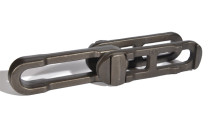
● Design: Closed-link or bushing-type chains can better handle impact and abrasive loads.
***Chains from Camvey are made from high-strength alloy steel and undergo advanced heat treatments, making them ideal for long-term coal slag transport.
Operational Tension Control
Maintain proper chain tension during operation by adjusting the take-up device to eliminate slack. Unlike belts, conveyor chains do not require pre-tensioning, which is unnecessary for normal operation.
A small amount of slack is allowed in the return chain in most scenarios to avoid excessive stress on the chain and related components. Regularly check tension and adjust the take-up device promptly if obvious slack or tightness is found.
Determine Chain Strength and Pitch
1. Tensile Strength:
✔ Chain must handle peak load × safety factor (typically ≥ 3 for coal slag).
2. Chain Pitch:
✔ Larger pitch → higher strength, lower fatigue life.
✔ Typical ranges:
☛ Scraper conveyors: 50–100 mm
☛ Bucket elevators: 76–100 mm
3. Plate & Pin Thickness:
✔ Thick chain plates resist impact and abrasive wear.
✔ Pins must match plate thickness to ensure proper load distribution.
***Camvey chains offer a wide range of pitches and plate thicknesses specifically engineered for abrasive materials like coal slag.
Focus on Wear Resistance
Coal slag is abrasive, so chain longevity is critical:
● Surface hardening: Case hardening or heat treatment to reach HRC 50–55.
● Lubrication: Regular oiling or chain guides to reduce friction.
● Chain design: Chains with bushings or liners reduce wear on pins and sprockets.
***Many operators choose Camvey because their chains combine high surface hardness with optimized bushings, extending chain life under heavy abrasive load.
Steps to Select the Right Chain
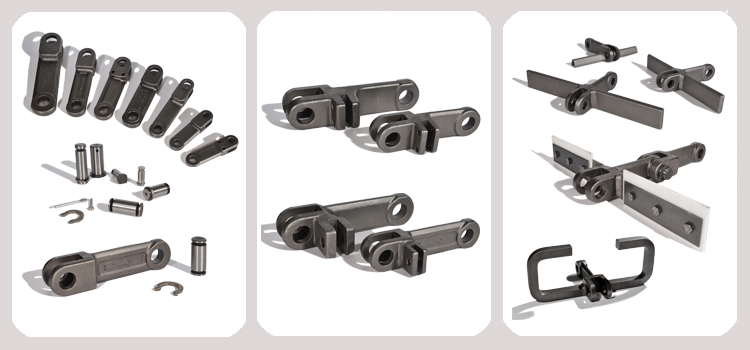
1.Identify conveyor type, load, speed, and environment.
2.Choose alloy forged steel chain with proper heat treatment.
3.Determine pitch and plate thickness to handle tensile load and shock.
4.Ensure wear-resistant design and plan lubrication.
5.Apply a safety factor ≥ 3 to ensure durability.
***Using Camvey chains ensures that every parameter above—strength, pitch, thickness, and wear resistance—is covered, giving you a reliable solution for coal slag transport.
👉 Contact our team for a professional evaluation.