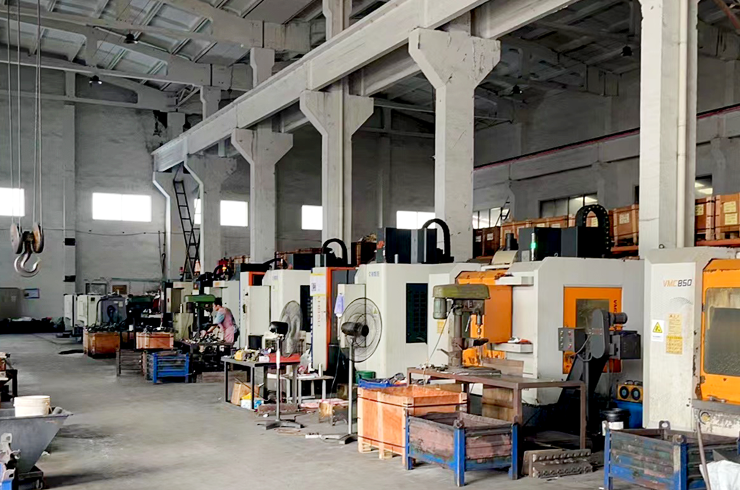
Operation Specifications for Forged Link Chain
These specifications apply to Camvey forged alloy chains, aiming to ensure safe, stable and efficient operation in heavy-duty conveying systems, extend service life, and prevent equipment failures and safety accidents. All operators and maintenance personnel must strictly comply.
Basic Operation Requirements
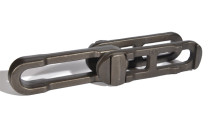
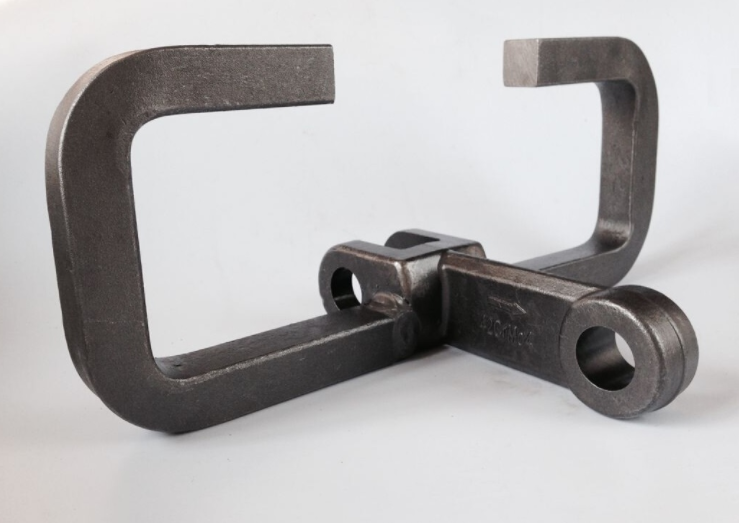
Forged link chains (especially forked link types) are designed for unidirectional operation by default. Operators must check the direction arrow on each link and follow the direction in Figure 1 during installation and operation. Bidirectional operation chains require advance customization and corresponding marking.
The chain is made of low-carbon high-alloy material with high strength, ductility and impact load resistance. Its surface is case-hardened to ±60HRC for excellent wear resistance. Do not modify the structure (e.g., grinding the surface) without authorization, to avoid damaging the hardened layer and reducing performance.
Assembly and Disassembly Specifications
Do NOT reuse pin keepers/retainers (including "C" clips and tension pins) during assembly or disassembly. These are critical for connection safety; reusing old ones may cause link loosening, equipment crashes and unplanned downtime. Use new matching retainers for each assembly.
For double or triple chains, check U-pins/bolts at the flight connection (Figure 1) before assembly. Ensure no parts are missing, all components are intact and tightened in place.
Operational Tension Control
Maintain proper chain tension during operation by adjusting the take-up device to eliminate slack. Unlike belts, conveyor chains do not require pre-tensioning, which is unnecessary for normal operation.
A small amount of slack is allowed in the return chain in most scenarios to avoid excessive stress on the chain and related components. Regularly check tension and adjust the take-up device promptly if obvious slack or tightness is found.
Regular Inspection Requirements
Inspect the chain regularly, focusing on pin retainers. Missing or damaged retainers can cause rapid chain separation and must be replaced/ repaired immediately.
Inspect flights and scrapers regularly. Straighten or replace bent ones promptly to reduce system stress, prevent chain damage and material blockage. Missing/bent parts will increase load on other components, leading to premature wear.
Monitor pin bore and pin elongation. Replace the chain immediately when elongation reaches 3mm (1/8 inch) to avoid in-operation failure.
Lubrication and Maintenance
Camvey forged link chains require no lubrication during normal operation. Drip lubrication (recommended: used gasoline engine oil) may be adopted to extend service life if conditions permit.
Keep the chain and surrounding system clean. Remove accumulated materials, dust and debris promptly to avoid abnormal wear from friction with impurities.
👉 Contact our team for a professional evaluation.